Do Gas Fireplaces Need to Be Cleaned and Inspected?
Yes, gas fireplaces need to be cleaned and inspected. Gas makes no creosote, but dust, pet hair, spider webs in the pilot, light soot from a drifting burner, haze on the glass, corrosion in the vent and nests in the chimney all build up, and the NFPA 211 fire safety standard calls for a yearly inspection of every fireplace, chimney and vent regardless of fuel. Ember Chimney & Fireplace services gas fireplaces across Dallas–Fort Worth and metro Atlanta: the chimney and fireplace inspection is $69 through the Colleyville and Fort Worth offices, and any repair comes with a free written price first.
This guide covers what gets dirty, how often to clean it, what you can safely do yourself, what a service costs, and the warning signs that mean stop using it and call.
What Builds Up in a Gas Fireplace
- Dust, lint and pet hair. They settle on the logs, burner and pilot all summer, then burn off as a sooty film and a burnt smell the first evening you light it.
- Spider webs in the pilot tube. Spiders are drawn to the smell of gas. A web the size of a pinhead in the pilot orifice is the single most common reason a pilot will not stay lit.
- Soot on the logs and glass. A well-tuned burner makes almost none. Logs nudged out of position or an air shutter that drifted closed make black deposits fast.
- White or gray haze on the glass. Direct-vent units develop a mineral film from combustion that needs a fireplace glass cleaner, not window spray; ammonia etches the glass.
- Corrosion. Water vapor is a product of burning gas. Over years it rusts the firebox floor, the burner tube and the vent connections, especially in a chimney without a cap.
- Blocked vents and flues. Birds, squirrels, leaves and wasp nests in an uncapped flue or a direct-vent termination are what turn a dirty fireplace into a carbon monoxide problem.
How Often to Clean a Gas Fireplace
| Task | How often | Who |
|---|---|---|
| Wipe the glass, vacuum the hearth and surround | Every 4 to 6 weeks in season | You |
| Vacuum the firebox, brush dust off the logs and media | 2 to 3 times a season | You |
| Burner and pilot cleaning, log placement, burn and CO test | Once a year | Technician |
| Vent or chimney inspection, cap and crown check | Once a year | Technician |
| Thermocouple, thermopile, valve and blower check | Once a year, with the service | Technician |
Book the yearly service in late summer or early fall. By the first cold front, every chimney company in Tarrant County is running two to three weeks out. Our post on getting the fireplace ready for the first cold front has the full checklist.
Do Gas Fireplace Chimneys Need to Be Cleaned?
Yes. A vented gas log set or a B-vent gas fireplace sends its exhaust up the same chimney a wood fire would use. It does not leave creosote, so it rarely needs a full sweep, but the flue still collects light residue, and it is open to the weather and to animals exactly like a wood flue. Two gas-specific problems also show up on inspections:
- Condensation damage. Gas exhaust is cooler and wetter than wood smoke. In an oversized masonry flue it condenses on the way up and eats mortar joints and clay tile. The fix is a correctly sized liner; see chimney relining and what relining costs.
- A damper that closes. Vented gas logs must have the damper clamped open. A damper that someone closed to stop a draft sends carbon monoxide into the room.
Direct-vent fireplaces use a sealed coaxial pipe instead of a chimney. The pipe does not need sweeping, but the outside termination needs a yearly check for nests, lint and corrosion, and the gasket on the glass needs to seal.
Vented, Direct-Vent or Vent-Free: What Changes
| Type | How it vents | What the yearly service checks | Common problem |
|---|---|---|---|
| Vented gas logs in a masonry fireplace | The existing chimney, damper clamped open | Flue, damper clamp, cap and crown, log placement, CO test | Condensation damage to the flue; damper closed by mistake |
| B-vent gas fireplace | A single-wall metal pipe through the roof | Pipe joints, termination cap, draft, log placement | Rusted pipe, nests in the cap |
| Direct-vent gas fireplace | A sealed coaxial pipe through the wall or roof | Glass gasket, pipe termination, burner, blower, pressure | Hazed glass, failed gasket, blocked termination |
| Vent-free gas logs | No vent; burns into the room | Oxygen depletion sensor, burner, room size and local rules | Odor, humidity, soot if the burner drifts |
Not sure which you have? A direct-vent unit has a fixed glass front that does not open for use. Vented logs sit in an open fireplace with a damper. Vent-free sets have a small sensor tube beside the pilot. Our fireplace installation page explains all three.
What You Can Safely Clean Yourself
- Turn the gas off at the valve and let the unit cool completely.
- Open or remove the glass only as the owner’s manual shows. Clean it with a gas fireplace glass cleaner, never ammonia.
- Vacuum the firebox floor and around the burner with a brush attachment. Do not vacuum loose ember material or vermiculite; it is part of the flame pattern.
- Brush dust off the ceramic logs with a soft paintbrush. Do not move them; placement is set by the manufacturer and wrong placement makes soot and carbon monoxide.
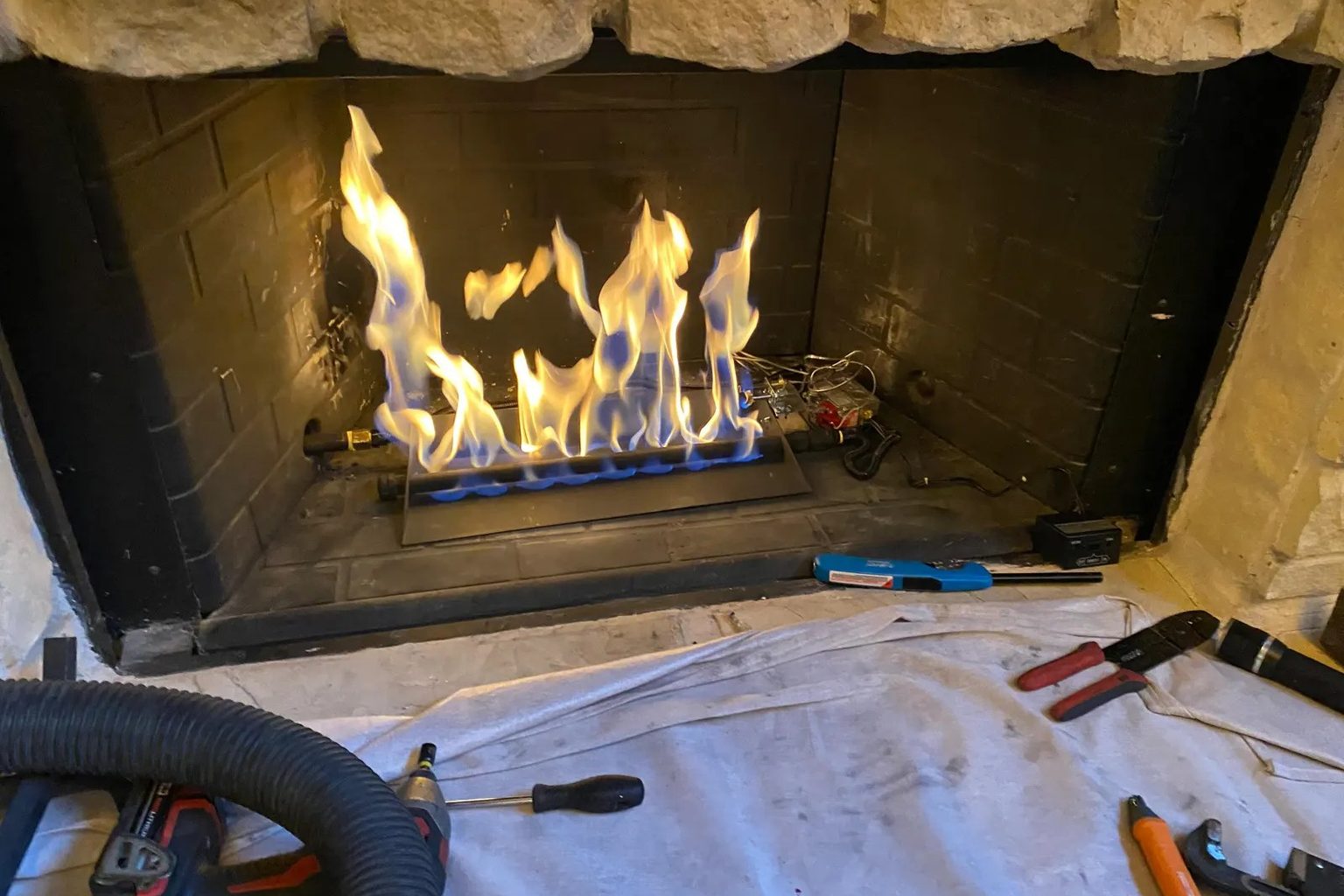
- Check that the pilot flame is blue and steady when you relight. A yellow, weak or flickering pilot means the assembly needs a cleaning you should leave to the technician.
Do not take the burner apart, adjust the air shutter, replace a thermocouple or work on a gas line yourself. Each one is a quick job for a technician and a leak test comes with it.
What a Professional Gas Fireplace Service Includes
On an Ember gas fireplace service in Colleyville, Fort Worth or Alpharetta, the technician:
- Cleans the pilot assembly, burner ports and orifice, and vacuums the firebox and log set.
- Resets the logs and ember bed to the manufacturer’s pattern.
- Tests the thermocouple, thermopile, valve, igniter, remote or wall switch and the blower if fitted.
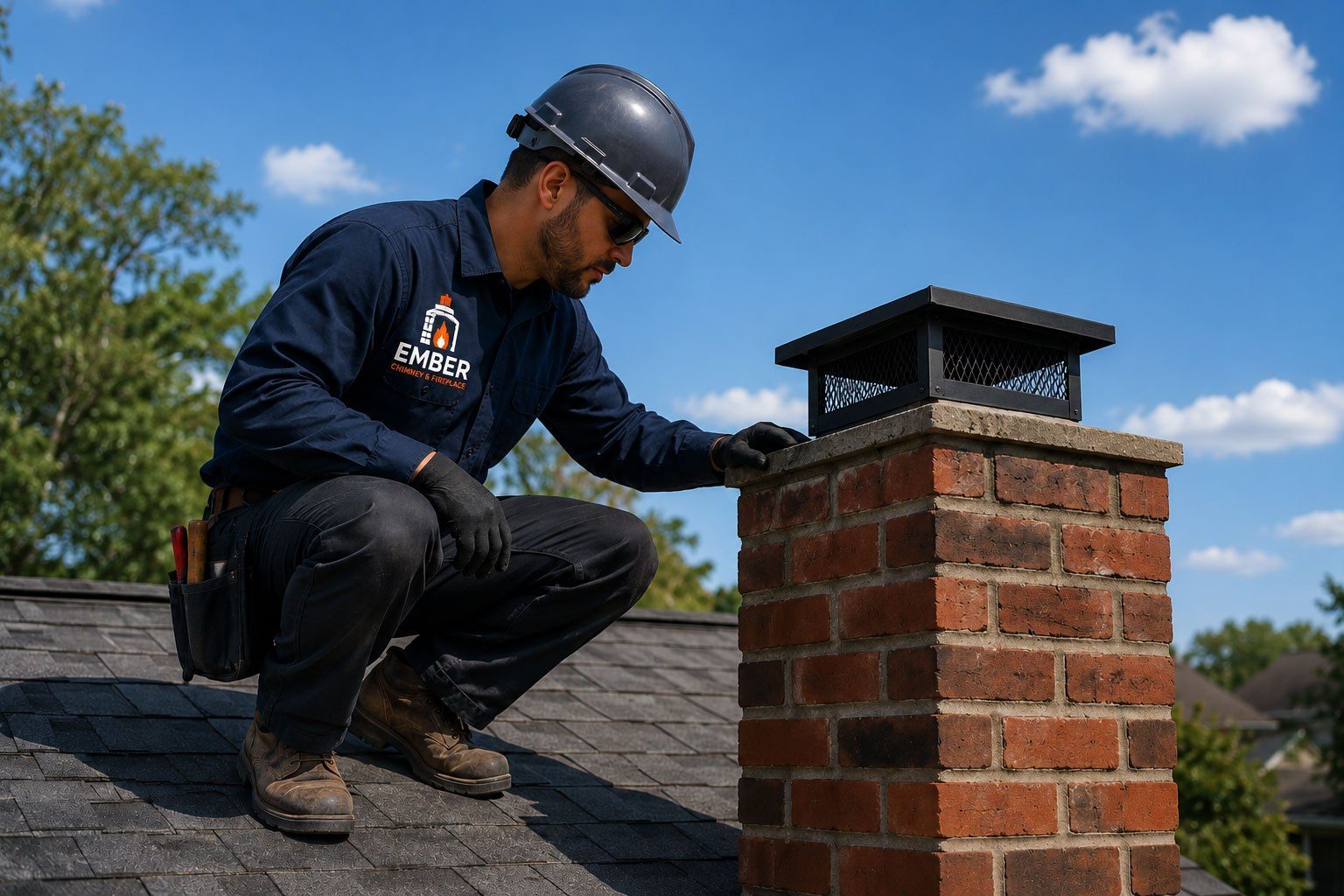
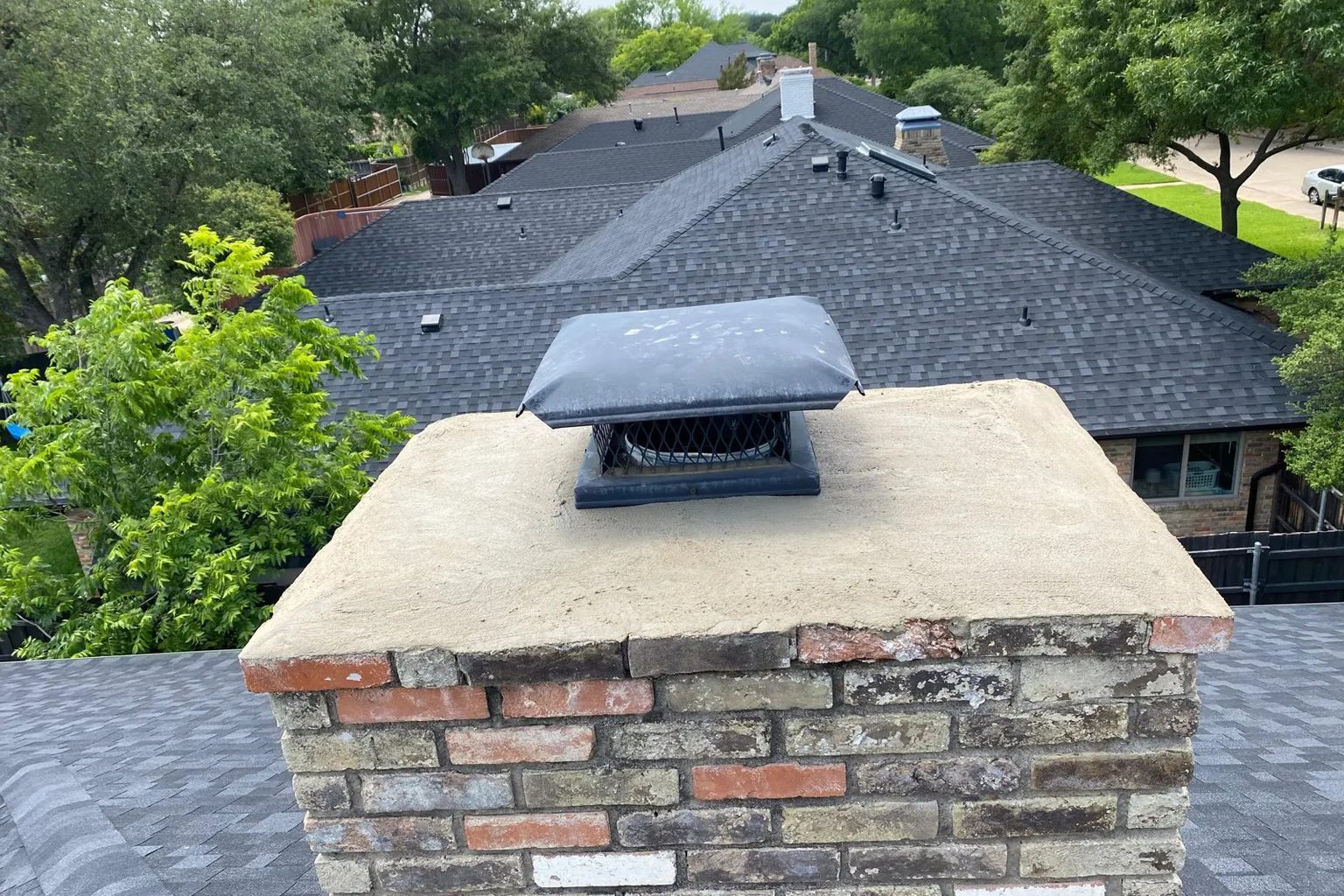
- Checks the venting: damper clamp on vented logs, flue or direct-vent pipe, termination cap, and the chimney cap and crown from the roof.
- Leak-tests every gas connection and runs a carbon monoxide test with the fireplace burning.
- Photographs anything that needs a repair and writes the price before leaving.
For what each repair costs, read how much fireplace repair costs.
What It Costs
A professional gas fireplace service call averages about $350 nationally, with basic maintenance as low as $100 and the most common repairs between $150 and $600 (Fireplace Experts, 2026). Thermocouple replacement runs $120 to $300 and a pilot light repair $100 to $250.
At Ember, the chimney and fireplace inspection is $69 through the Colleyville and Fort Worth offices, and the $149 Chimney Safety Package covers the cleaning and the inspection together, with the full $149 credited toward any repair booked within 30 days. Seniors get 10% off and military members 5% off. The price for any repair is in writing before the work starts.
Warning Signs: Stop Using It and Call
- A gas smell near the fireplace. Shut the valve, open a window, leave the room and call.
- Soot on the glass or black tips on the logs after one or two fires.
- Yellow, lazy or lifting flames instead of blue-based steady ones.
- The pilot will not stay lit, or the fireplace lights and shuts off. See why a gas fireplace won’t light after sitting all summer.
- A carbon monoxide detector that chirps when the fireplace is on.
- Headaches or a stuffy, humid feeling in the room when the fireplace is burning.
- Rust flakes or water in the firebox, a sign the vent or cap is letting rain in.
Book a Gas Fireplace Service
Ember Chimney & Fireplace is a BBB Accredited Business with an A rating and 5.0 stars on Google. Our CSIA-certified technicians service gas, propane and wood fireplaces across Dallas–Fort Worth and metro Atlanta, with same-day appointments when the schedule allows and our Zero-Mess Guarantee inside the house. See fireplace cleaning and fireplace repair, or request a free estimate. Georgia homeowners can read fireplace repair in Alpharetta.