How to Get Your Fireplace Ready for the First Cold Front in Dallas-Fort Worth
Before the first cold front in Dallas-Fort Worth, open the damper, look up the flue for nests and debris, test your smoke and carbon monoxide alarms, and clear the hearth. If nobody has inspected the chimney in the last 12 months, book an inspection before you light it, since the National Fire Protection Association’s NFPA 211 standard calls for one every year. Here is how to prepare your fireplace for the winter season.
Most DFW fireplaces sit unused from March to November. That is eight months for birds to build nests, for leaves to collect on the smoke shelf, and for last winter’s creosote to sit in the flue. The first fire is when those problems show up.
Why the First Fire Is the Riskiest One
Last season’s creosote is still in the chimney flue, and creosote buildup is what burns in a chimney fire. Over the summer, birds and squirrels move into chimneys without caps. In North Texas, chimney swifts nest in open flues from spring through early fall, and their nests are dry twigs stuck to the flue wall.
None of this is a problem until you light a fire under it. Then you get smoke in the room, a strong smell, or in the worst case a fire inside the flue.
A 7-Step Fireplace Maintenance Checklist for DFW Homes
1. Open and test the damper
The damper should open fully and close tight. If it sticks, grinds or will not stay open, do not light a fire. A rusted damper is also a sign that water is getting into the chimney.
2. Look up the flue
With the damper open, shine a flashlight up the flue. You should see daylight or the underside of the cap. Twigs, leaves, bird nests or a lot of black, flaky buildup means a blockage, and the chimney needs a sweep first.
3. Check the firebox
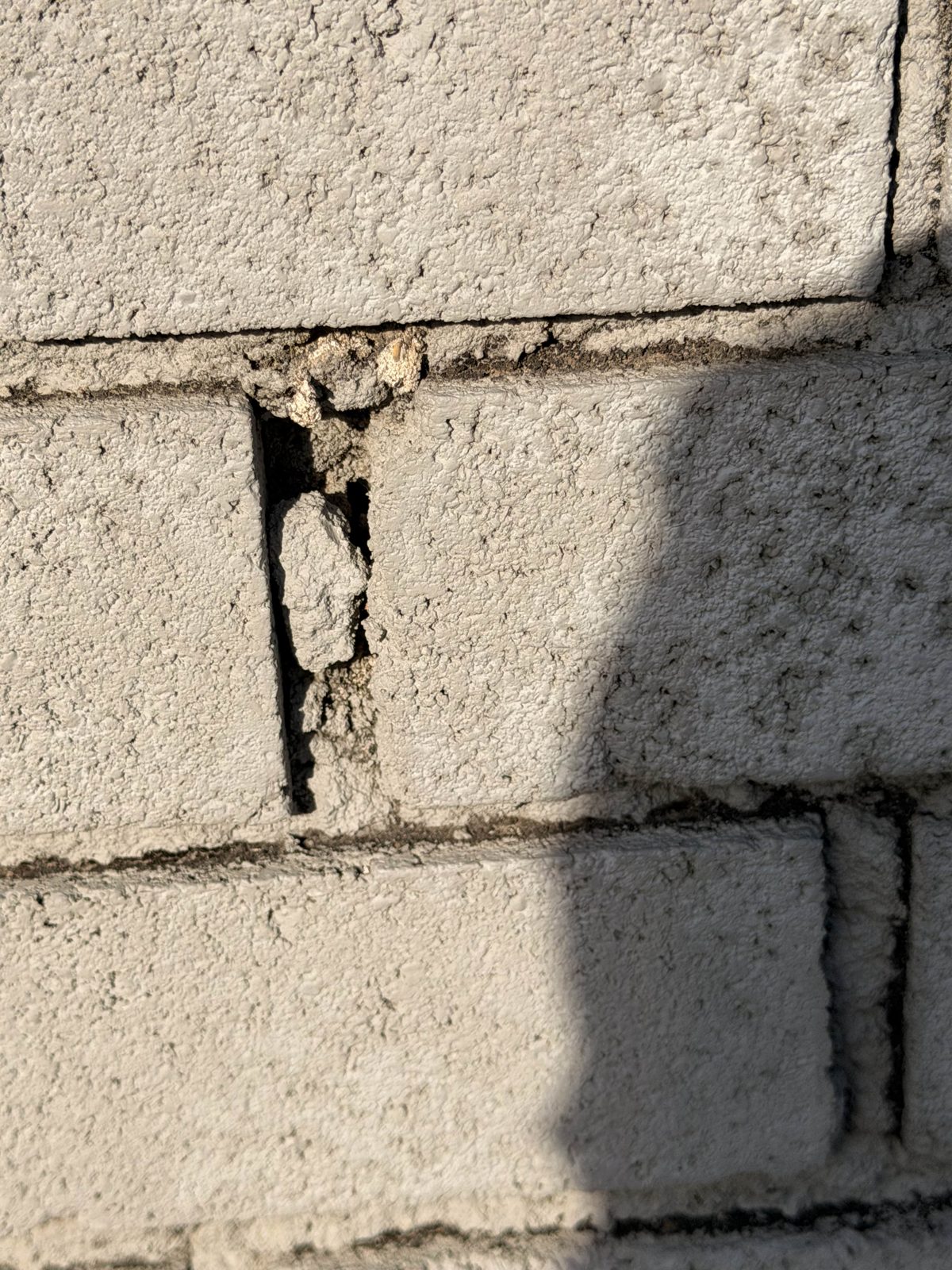
Look for cracked or missing firebrick and gaps in the mortar between bricks. Heat gets through those cracks to the framing behind the fireplace. Small cracks can be repaired; see our guide on cracked firebrick.
4. Test smoke alarms and carbon monoxide detectors
Push the test button on every alarm, and put in fresh batteries. You need a carbon monoxide alarm on every floor with a fireplace, gas or wood. The U.S. Fire Administration also recommends keeping anything that can burn at least 3 feet from the fireplace.
5. Clear the hearth and burn only seasoned wood
Move rugs, blankets, decorations and kindling stacks off the hearth and away from the opening. For wood fireplaces, set the grate inside the firebox and burn only seasoned, dry wood; wet wood smokes and builds creosote fast. Fall decor on the mantel should not hang down toward the firebox. In dry, windy weeks, check what a burn ban means for your fireplace.
6. Check the chimney cap from the yard
Stand in the yard and look at the top of the chimney. You want a cap with mesh on all sides. A missing, rusted or bent cap lets in rain, birds and animals.
7. For gas fireplaces: check the pilot, glass and blower
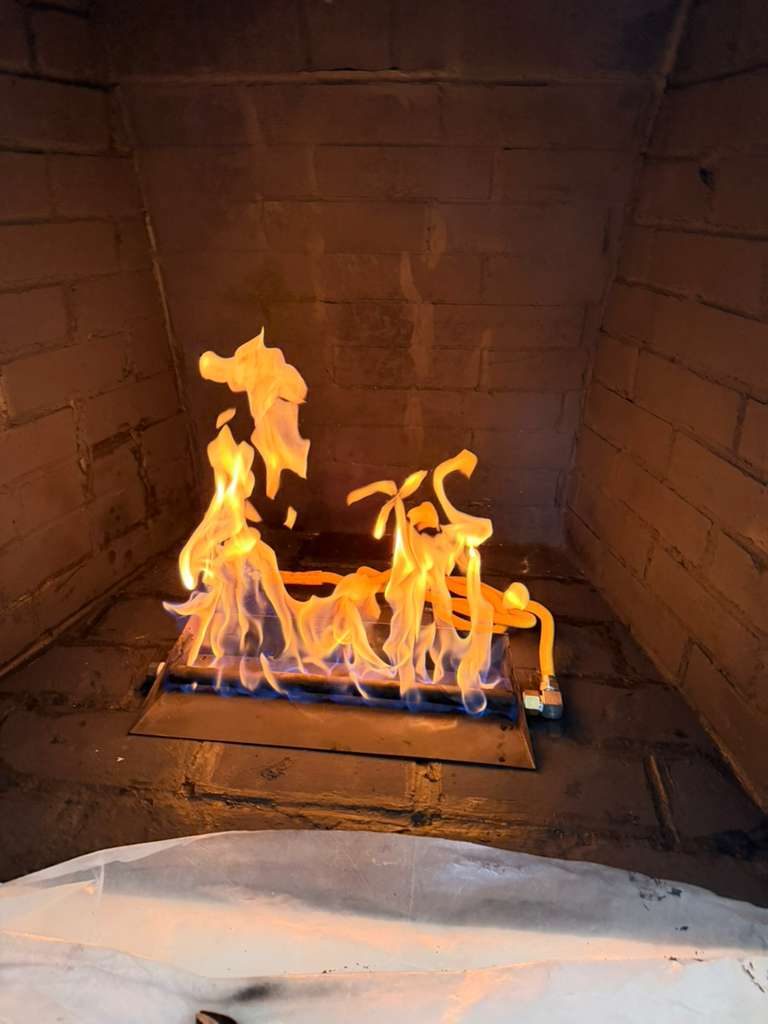
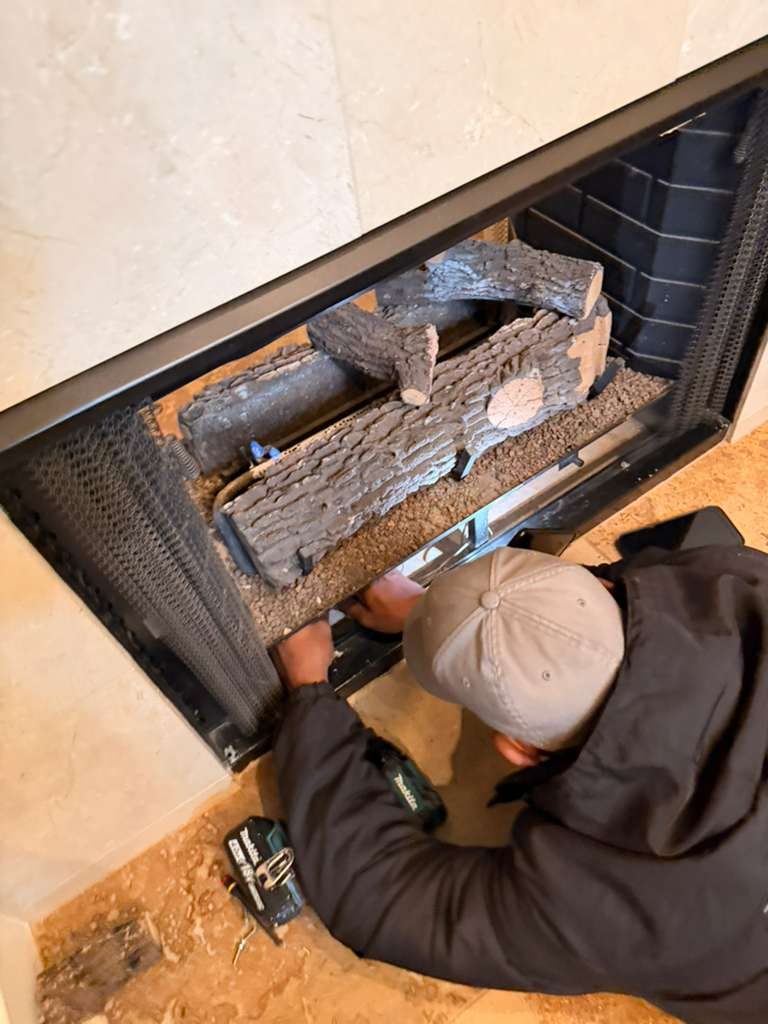
Gas fireplaces need a look too. Clean the glass, check the door gasket for gaps, make sure the logs sit where the manual shows them, test the blower, and light the pilot. If the pilot will not stay lit, read our guide on why a gas fireplace won’t light after summer.
Signs You Should Call Before You Light a Fire
- Smoke came into the room last winter.
- You smell a strong tar or campfire smell in the house, even with no fire going.
- You see black flakes or pieces of nest in the firebox.
- You hear birds or scratching in the chimney.
- There are water stains on the ceiling or wall near the chimney.
- The chimney has not been inspected in more than a year.
Any of these means the chimney needs an inspection first. Lighting a fire over a blocked or dirty flue is how chimney fires start.
What a Pre-Season Chimney Service Includes
Ember’s Chimney Safety Package is $149. It includes:
- Chimney sweep: the flue, smoke chamber and firebox cleaned of soot and creosote.
- Safety inspection: the chimney checked from top to bottom, including the damper, crown and cap.
- Photo report: pictures of what we found, so you see the inside of your chimney yourself.
- Repair credit: if we find a problem and you book the repair within 30 days, the full $149 comes off the repair price.
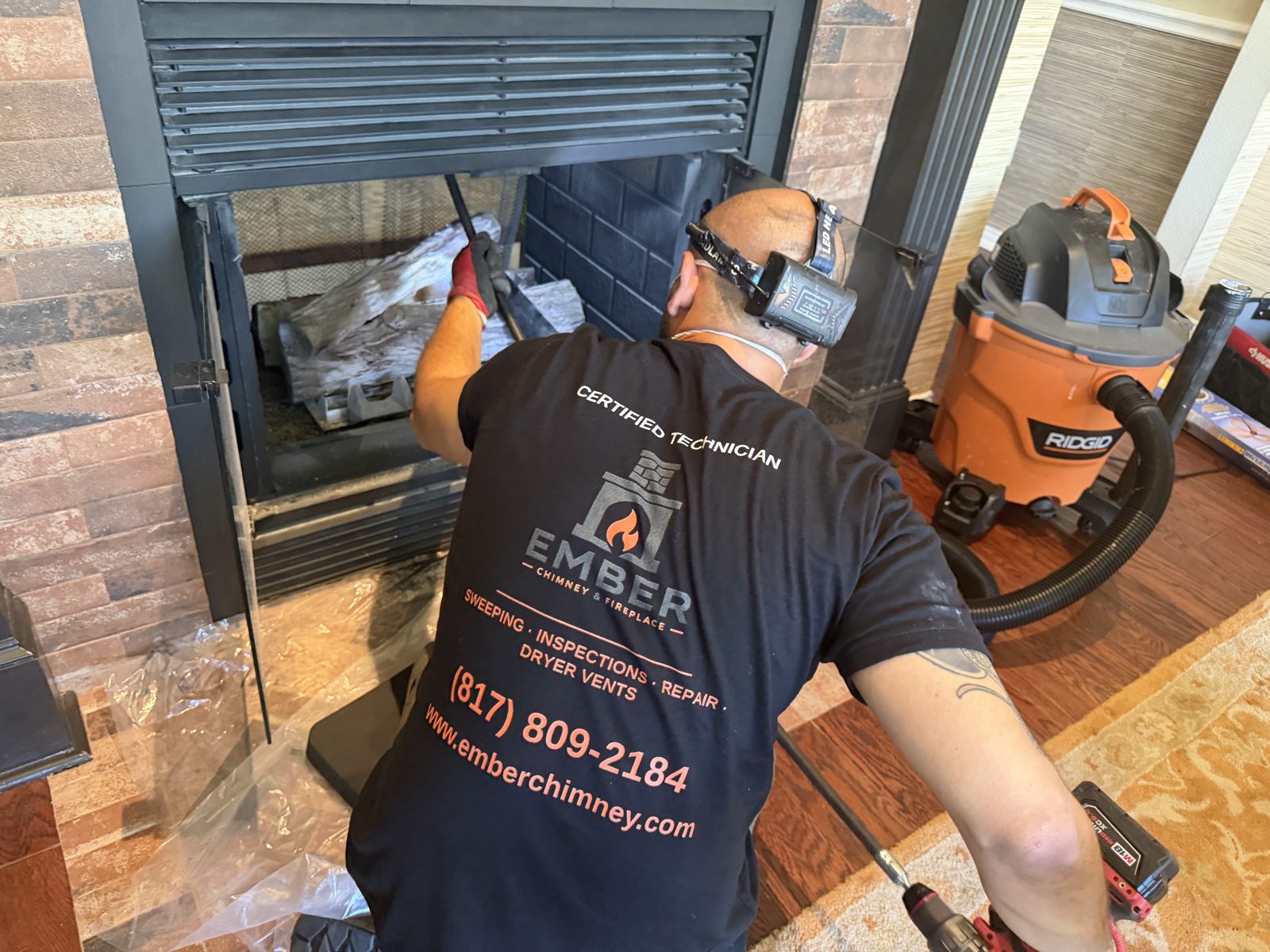
The work is done by CSIA-certified chimney technicians. We lay down drop cloths and use HEPA vacuums indoors. If we find a problem, you get photos and a written price before any work starts. For a full breakdown of what sweeps cost, see how much a chimney sweep costs.
When to Book in Dallas-Fort Worth
October and early November are the busiest weeks of the year for chimney companies in North Texas. The first cold front sends everyone to the phone at once. Booking in late September or the first half of October gets you the day you want and a chimney that is ready before you need it.
Call Ember Chimney & Fireplace or send the form, and a real person calls you back within 10 minutes to book a time.