Why Won't My Gas Fireplace Light After Sitting All Summer?
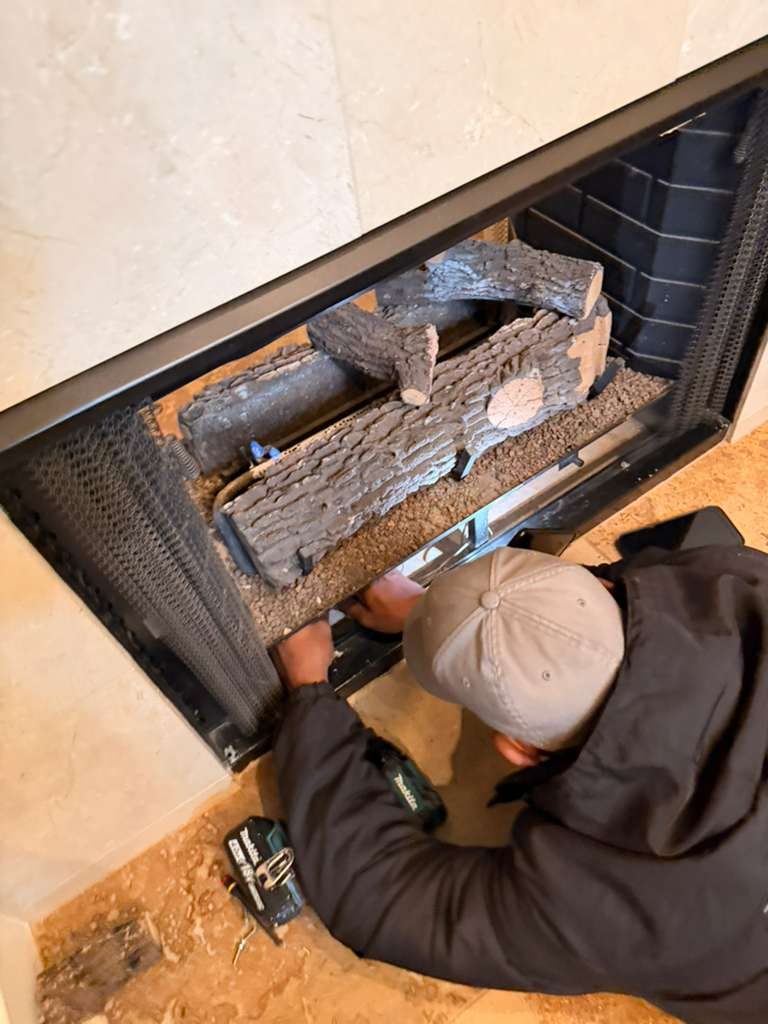
A gas fireplace that won’t light after summer usually has one of four problems: the gas valve is off, dust or spider webs are blocking the pilot, the thermocouple or thermopile is worn out, or the batteries in the remote or receiver are dead. You can check the valve, switch and batteries yourself in five minutes; the pilot assembly, gas valve and burner are a job for a technician.
If you smell gas, stop. Do not try to light the fireplace, do not flip switches, and leave the house. Call your gas company from outside.
Most homes in Dallas-Fort Worth have gas fireplaces, and most of them sit untouched from March to November. That long rest is exactly why so many of them won’t start on the first cold night.
Gas Fireplace Troubleshooting: Check These First
These checks are safe to do yourself and fix more no-start calls than any part replacement.
Is the gas valve open?
Look for a key valve on the wall or floor near the fireplace, or a valve behind the lower access panel. Some homeowners turn it off for summer and forget. The handle should run in line with the gas line when it is open. If you just turned on the gas, give it a minute for gas flow to reach the pilot before you try to light the pilot again.
Are the batteries dead?
Many remotes and receivers run on batteries. The receiver usually sits under the fireplace behind the lower panel. Dead batteries are the cheapest fix there is.
Is the power on?
Units with electronic ignition, a blower or a wall switch need power. Make sure the fireplace is plugged in and check the breaker if nothing responds.
Is the switch on?
Check the wall switch and, if your unit has one, the on/off switch on the control panel under the logs. Make sure the control knob is set to “pilot” when you light it and “on” when you run it.
Why the Gas Fireplace Pilot Light Won’t Stay Lit
A worn thermocouple or thermopile
The thermocouple (or the larger thermopile on many units) sits in the pilot flame and tells the gas valve the flame is there. If it is worn, dirty or bent away from the flame, the valve shuts the gas off the moment you let go of the button. This is the most common repair we make on gas fireplaces in the fall.
A dirty or blocked pilot
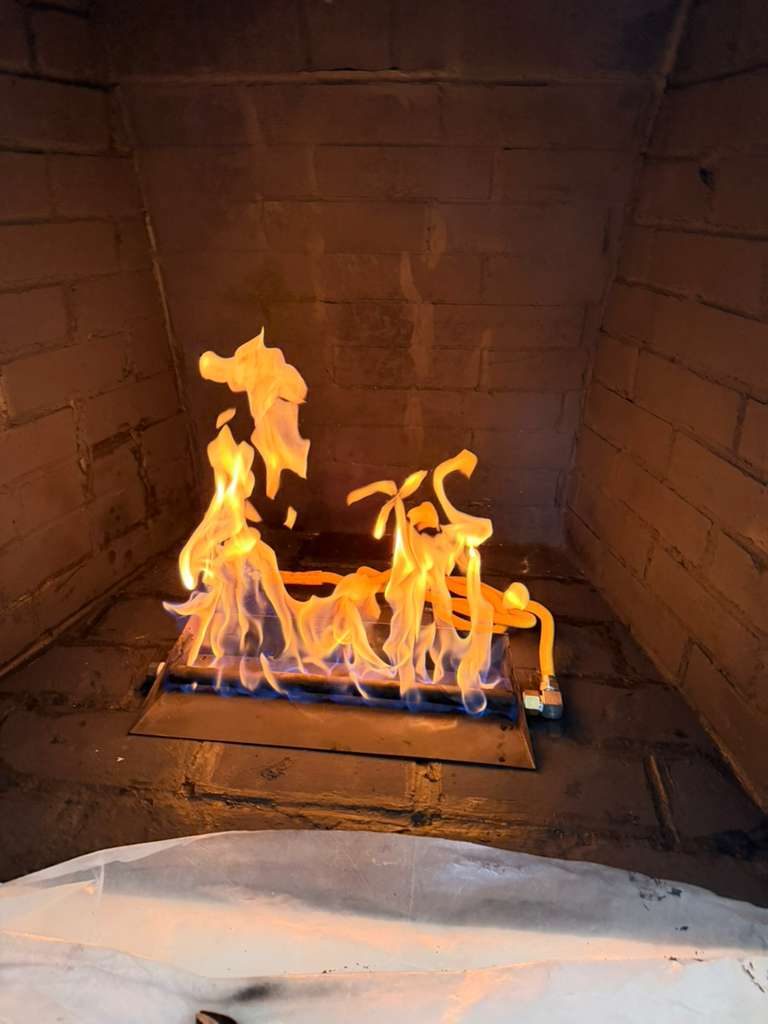
Over the summer, dust, lint and spider webs collect in the pilot tube. The pilot then burns weak and yellow instead of strong and blue, or it will not light at all. A weak flame also fails to heat the thermocouple, so the fireplace shuts off.
A failed igniter (ignitor)
If you press the igniter and hear no click or see no spark, the igniter or its wire may be bad. On electronic-ignition units, the control module can also fail.
Why the Pilot Is Lit but the Gas Logs Won’t Ignite
When the pilot burns but the main burner never comes on, the problem is between the pilot and the burner:
- Weak thermopile: it makes enough power to hold the pilot but not to open the main valve.
- Switch or wiring problem: a loose wire or worn wall switch breaks the signal.
- Blocked burner ports: dust or insects block the holes the gas comes out of.
- Gas valve failure: less common, but it happens on older units.
- Low gas flow: if other natural gas appliances in the house are also acting up, the problem may be the gas supply, not the fireplace. Call your gas company.
Signs You Need a Technician
- You smell gas at any point.
- The pilot flame is yellow, lazy or lifting off the pilot hood.
- The glass gets heavy white or black buildup quickly.
- You see soot on the logs or the wall above the fireplace.
- The fireplace makes a loud pop or whoosh when it lights.
- The carbon monoxide alarm goes off.
Any of these means stop using the fireplace and have it checked. A flame that burns dirty can give off carbon monoxide, so keep a working CO alarm on every floor with a gas appliance, as the U.S. Fire Administration recommends.
What Ember Does on a Gas Fireplace Repair
Ember Chimney & Fireplace repairs every part of a gas fireplace:
- Pilot assemblies, thermocouples and thermopiles
- Igniters and electronic ignition modules
- Gas valves and burners
- Remotes, receivers and wall switches
- Glass cleaning and replacement, and log placement
- The vent or flue the fireplace exhausts through
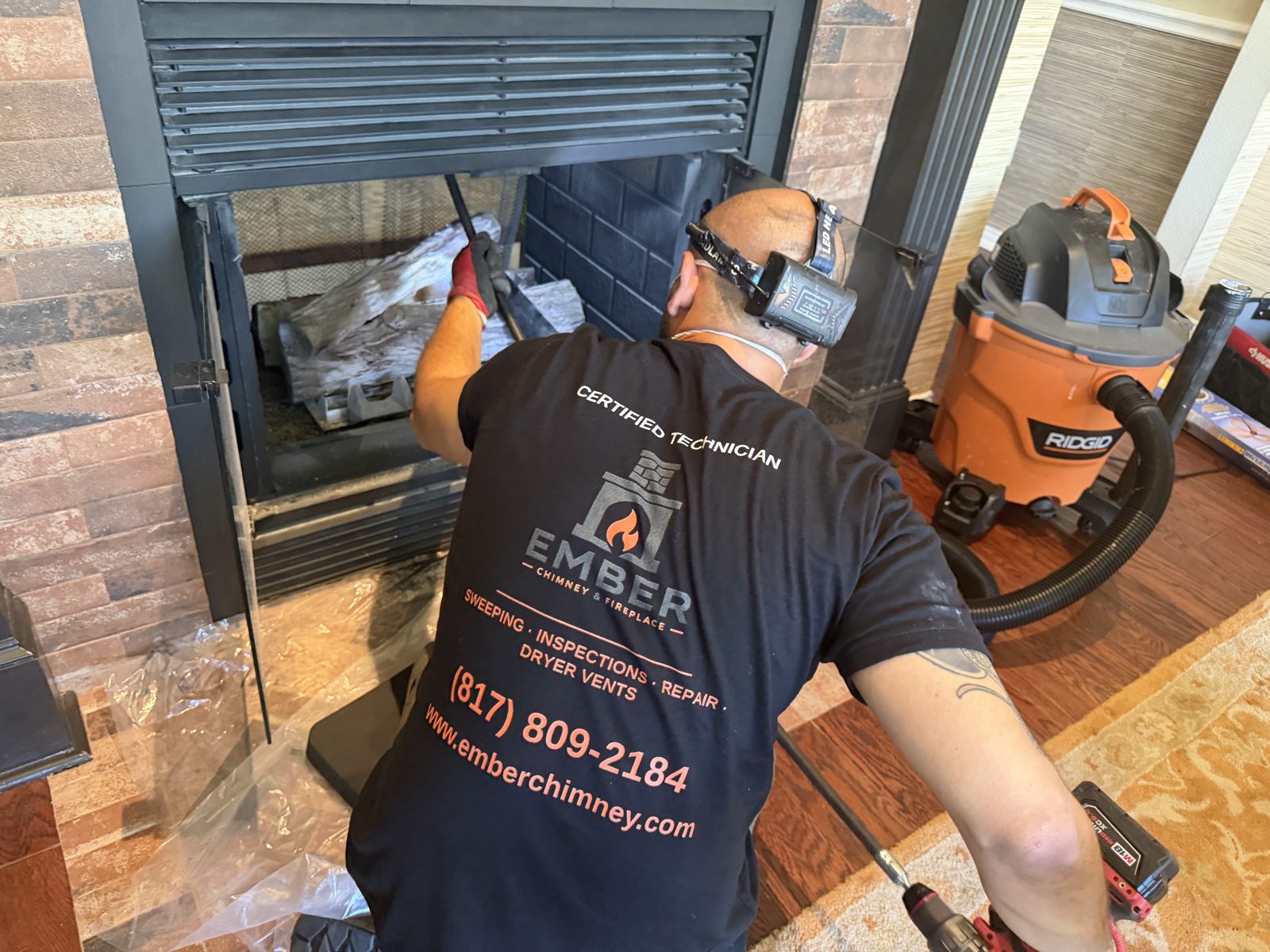
We test the unit, show you what we found, and give you a written price before any repair starts. See our fireplace repair page for more, or read how to get your fireplace ready for the first cold front.
Prevent It Next Year
Regular maintenance is the cure for most of these causes and fixes. Have the fireplace serviced once a year before winter. The NFPA 211 standard calls for a yearly check of fireplaces, chimneys and vents, gas included. A yearly service cleans the pilot and burner, tests the thermocouple or thermopile, and catches a weak part before it leaves you with a cold fireplace on the first cold night.
Call Ember Chimney & Fireplace or send the form, and a real person calls you back within 10 minutes.