Can a Hard Freeze Crack Your Chimney in North Texas?
Yes, a hard freeze can crack your chimney. Water soaks into the concrete crown, the bricks and the mortar, and when it freezes it expands and pushes the masonry apart; every freeze-and-thaw cycle opens those cracks a little wider. Dallas-Fort Worth gets enough freezes to do real damage, so a chimney that already lets water in can look very different after one winter.
Yes, DFW Gets Hard Freezes
North Texas is not Minnesota, but it freezes more than most people remember. The National Weather Service’s freeze records for DFW Airport show:
| Winter | Lowest temperature | Nights at or below 32°F |
|---|---|---|
| 2020-21 (Winter Storm Uri) | -2°F | 24 |
| 2022-23 | 11°F | 21 |
| 2023-24 | 11°F | 15 |
| 2024-25 | 12°F | 30 |
| 2025-26 | 13°F | 19 |
That is 15 to 30 freezing nights a winter, often with warm afternoons in between. For masonry, that back-and-forth is the problem. Water soaks in during the day and freezes at night, again and again.
How the Freeze-Thaw Cycle Damages a Masonry Chimney
Brick, mortar and concrete are porous. A masonry chimney soaks up rain the way a hard sponge would. When temperatures dip below freezing, that water turns to ice and expands inside the masonry. When it thaws, more water gets in. Each round of freezing and thawing pushes the cracks open a little wider, and that is how small winter damage turns into structural damage.
The crown cracks first
The crown is the concrete cap on top of the chimney. It takes rain straight on, and many crowns in DFW were built with plain mortar instead of proper concrete. Once a hairline crack forms, water gets in, freezes and widens it. Read more on why a cracked crown needs action.
Mortar joints crumble and come loose
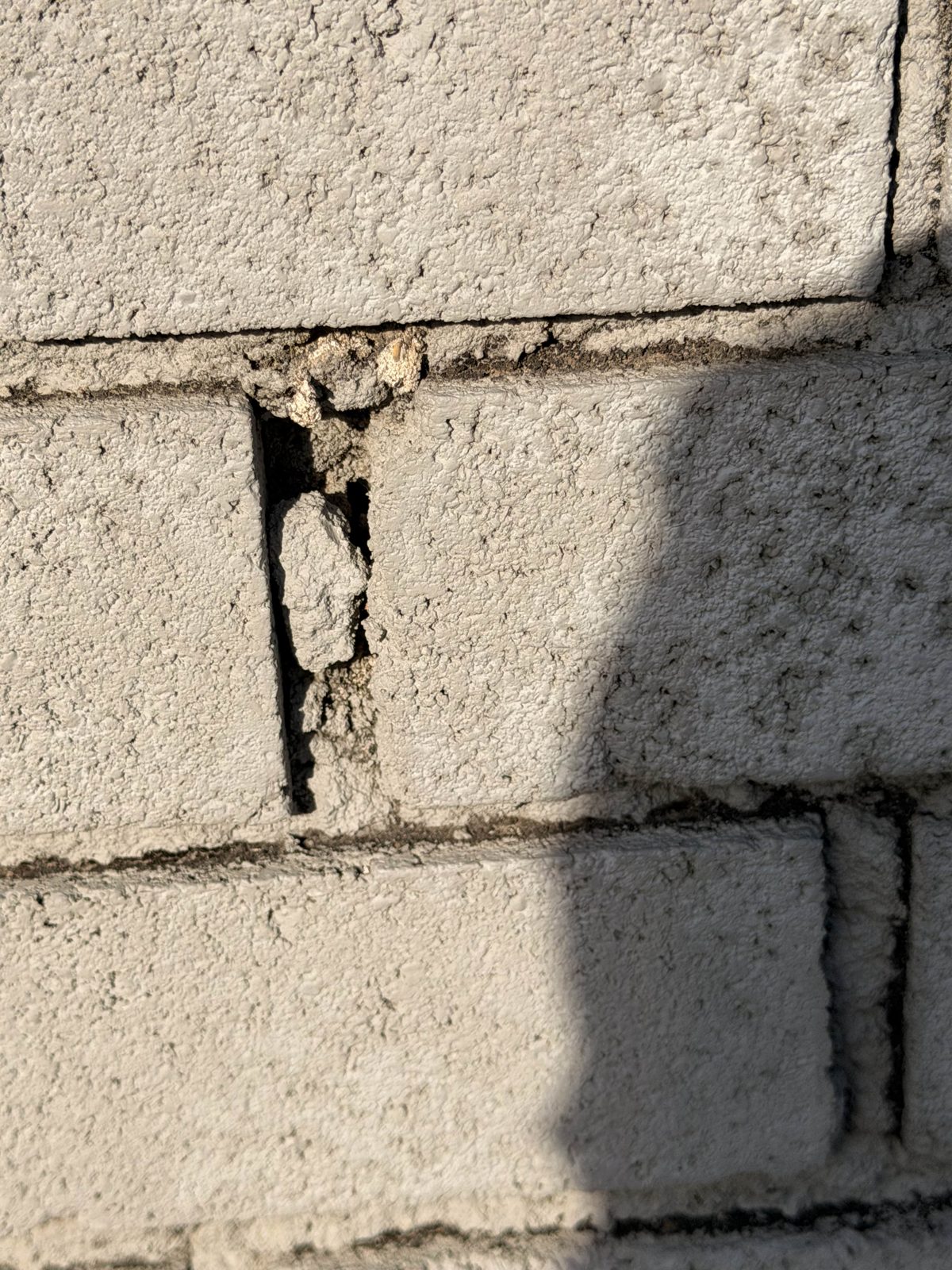
Mortar is softer than brick. Water in the joints freezes and breaks the mortar into sand and chunks, like the joint in the photo above, from a chimney Ember inspected in Richardson. Once mortar is gone, water runs straight into the chimney.
Brick faces flake off
Water inside a brick freezes and pops the face off. This is called spalling. You will see flakes of brick on the roof or in the gutters, and rough, broken faces on the chimney.
Flashing pulls loose
The metal flashing where the chimney meets the roof can lift when the masonry around it moves. Loose flashing is one of the most common causes of chimney leaks.
The flue liner can crack
Inside the chimney, a clay tile liner can crack from water and temperature swings. You can’t see this from the yard, and it is the most dangerous kind of damage, because heat and gases can escape through the cracks.
Warning Signs of Freeze-Thaw Damage After Winter Weather
From the yard or a safe spot, look for:
- Cracks across the concrete crown on top of the chimney
- Loose mortar, gaps or deteriorating mortar joints between bricks
- Cracked bricks or bricks that shift when touched
- Flaking brick or brick pieces on the roof and in gutters
- White, chalky staining on the brick (water moving salts through the masonry)
- Flashing that is bent, lifted or rusted
Inside, look for:
- Water stains on the ceiling or wall near the fireplace
- A rusty damper or water in the firebox
- Bits of tile or mortar in the firebox
- A musty smell or damp spots, signs of water intrusion that can lead to water damage in the walls and ceiling
Repairing Freeze-Thaw Chimney Damage
Small problems are cheap to fix and big ones are not. Waiting lets water keep running down the chimney, and freeze damage left alone ends in costly repairs. Sealing a hairline crack in a crown or repointing a few mortar joints is a small job. Rebuilding a crown or the top of the chimney structure costs many times more, and masonry repairs on the exterior of the chimney get bigger every winter they wait. For typical prices, see how much chimney repair costs.
Common fixes after freeze damage:
- Crown repair or rebuild: cracks sealed, or a new crown poured with an overhang that sheds water.
- Repointing (tuckpointing): old mortar cut out and new mortar packed in. See masonry repair.
- Brick replacement: spalled bricks taken out and replaced.
- Flashing repair: flashing resealed or replaced.
- Chimney cap: a cap with a wide top keeps rain off the crown and out of the flue.
- Waterproofing: after repairs, a breathable water repellent made for masonry slows water from soaking in. Paint and standard sealants trap moisture and make freeze damage worse.
How Annual Chimney Inspections Prevent Winter Damage
The goal is simple: keep water out of the masonry, and there is nothing to freeze. Have the chimney inspected once a year, as the NFPA 211 standard recommends, and fix cracks while they are small. During annual chimney inspections, a chimney technician checks the crown, mortar and flashing from the outside, and the chimney sweep checks the flue liner from the inside. A chimney inspection before winter catches crown and mortar problems before the freezes start.
Why a certified chimney technician should do the inspection
Freeze damage often hides inside the flue, where you can’t see it from the yard or the hearth. A certified chimney technician knows what freeze-thaw damage looks like in a liner, a smoke chamber and a crown, and can tell a cosmetic crack from structural damage. Ember’s technicians are certified by the Chimney Safety Institute of America (CSIA). A professional chimney inspection with photos gives you the facts before you spend money on any chimney service or repair.
Ember Chimney & Fireplace inspects chimneys across Dallas-Fort Worth with CSIA-certified chimney technicians, and shows you photos of what we find. You get a written price before any chimney repair starts. Call or send the form, and a real person calls you back within 10 minutes.